Backend
Backend is Autumn/Winter, the latter part of the year when the weather turns, the time after harvest. If there’s a nip in the air, you might say “it’s feeling backendish” or “backend-like”.
Fothering
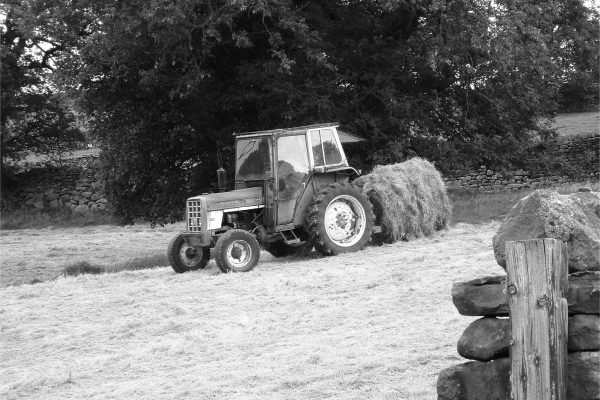
Fother (fodder) is winter feed for livestock such as hay, silage, also sheep “cake” in the form of pencils/cob-nuts, or high energy mix usually called “ration”, which looks a bit like dry muesli.
“Fothering up” or “fothering time” means feeding livestock, and is something you do with both indoor and outdoor animals during the winter months, depending on the weather. Hay and silage are essential replacements for fresh grass when there’s snow on the ground, or for animals kept indoors.
Raddle
This is a dye applied to the front of a tup (ram) so that when he mates with yows (ewes) the colour transfers onto them. This is useful to farmers in a couple of ways 1) you can see which yows have been “tupped” and make sure that your tup is “working”, and 2) you can work out when your pregnant yows are due to give birth the following spring.
During tupping time, farmers will change the colour of the raddle. If a yow is tupped again, the new colour will cover the old. So farmers usually start with a light colour such as yellow and then use darker colours such as red or green later on.
Raddle is bought as dry powder and mixed with vegetable oil to make a paste, or you can now buy buckets of ready mixed (some farmers prefer crayons – colour blocks which are held on the tup with a harness). Raddle is daubed onto the tup’s wool with a flat paddle and needs to be reapplied every day or so.
Tup Lowsing
This has nothing to do with fleas or lice! “Lowsing” is the dialect pronunciation of loosing, i.e. letting the tups loose. This is when they are put in with the yows to mate. If you’ve “lowsed tups” it means you’ve let them go in with the flock, the start of “tupping time”.